The Donner EM1 review centers on a simple stage-monitoring need: getting a personal headphone or in-ear monitor feed from an XLR or TRS source.
Its rechargeable battery, belt clip, and stereo/mono switch make it worth considering for musicians who want a portable wired setup.
Donner EM1 Review Summary
The quick verdict
800+ ratings
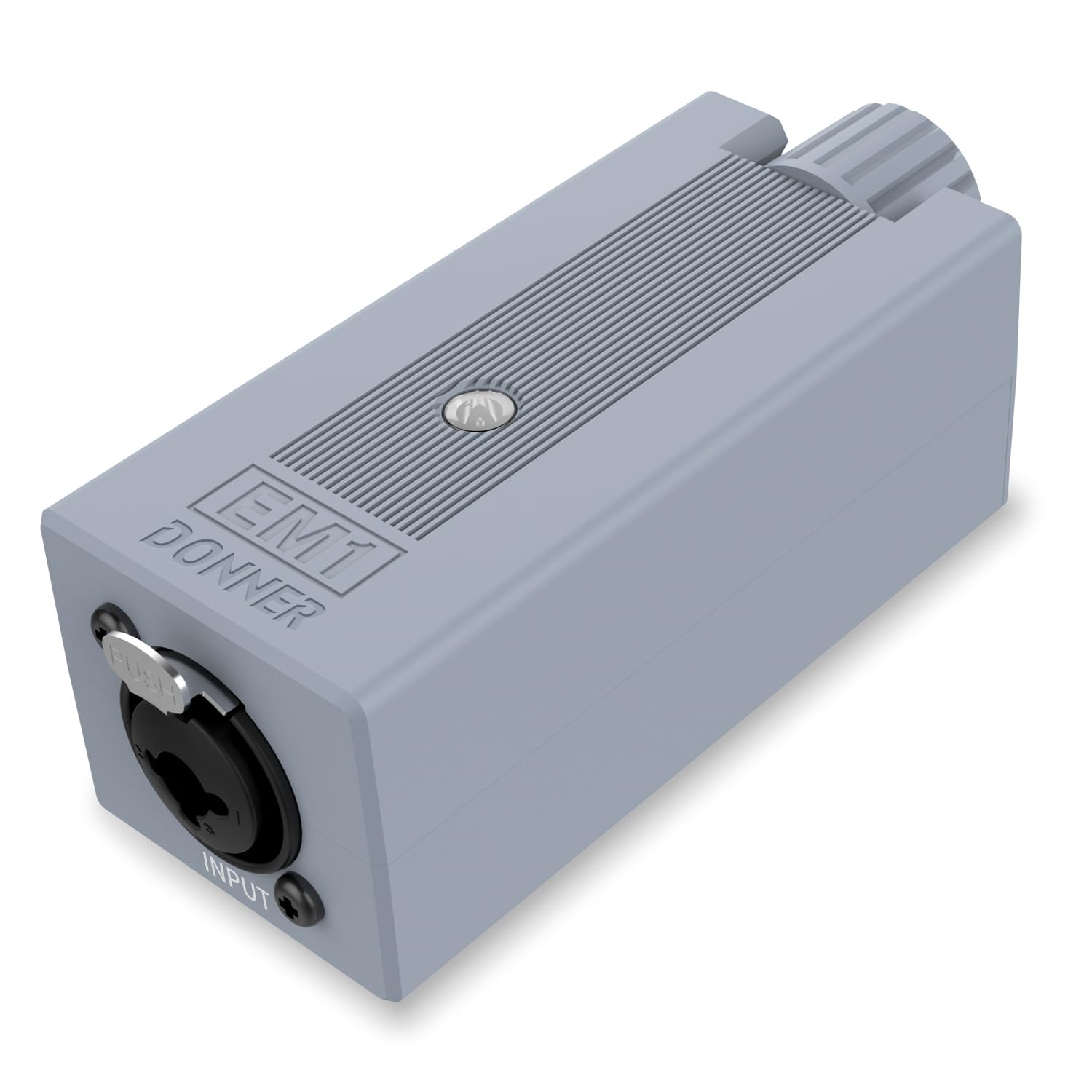
Read Amazon ReviewsDonner EM1
A compact, rechargeable monitor amp for musicians who need personal headphone monitoring from XLR or TRS sources.
- XLR and TRS input connectors with a locking mechanism.
- 3.5 mm headphone or in-ear monitor output.
- Stereo/mono source switch for adapting to the cable connection.
- High-power headphone amplifier designed to accommodate high-impedance professional headphones.

Pros
- Supports both XLR and TRS input connections.
- Rechargeable design avoids relying on a permanent wired power connection during use.
Consider before buying
- It does not support microphones, limiting it to headphone-monitoring duties rather than microphone amplification.
- The 3.5 mm output may require an adapter if your headphones or in-ear monitors use a different plug.
Read the full review summary
The EM1 combines a high-power headphone amplifier with XLR and TRS input connections, a 3.5 mm output, and a locking mechanism on its input connector.
It also provides a stereo/mono source switch, which can help adapt the unit to the connected cable setup. The manufacturer positions it for high-impedance professional headphones as well as in-ear monitoring.
Its portable metal body, belt-pack clip, and rechargeable lithium-ion battery make the design suited to practice, rehearsal, or stage use where a personal wired monitor feed is useful.
The stated battery life is up to 12 hours, so actual runtime will depend on conditions. The EM1 does not support microphones, making it a headphone-monitoring amplifier rather than a microphone preamp or all-purpose audio interface.
The buying factors
Donner EM1 Scorecard
Editorial scores reflect listed features and buyer fit; they are not laboratory measurements or customer ratings.
Input flexibility
XLR and TRS inputs accommodate common source connections, with a locking mechanism intended to help keep the connection secure.
Output simplicity
A 3.5 mm output suits many headphones and in-ear monitors, though buyers should check that their specific listening gear uses a compatible plug.
Portability
The compact design and solid metal belt-pack clip are useful for carrying the amplifier during practice or performance.
Battery convenience
Rechargeable power and a stated maximum of up to 12 hours offer cordless operation, with runtime varying by use.
Monitoring controls
A volume control and stereo/mono source switch cover basic personal-monitoring adjustments.
Use-case versatility
It is focused on headphone monitoring and does not support microphones, so it is not suited to every audio-routing task.
Key Features and Specifications of Donner EM1
- XLR and TRS input connectors with a locking mechanism.
- 3.5 mm headphone or in-ear monitor output.
- Stereo/mono source switch for adapting to the cable connection.
- High-power headphone amplifier designed to accommodate high-impedance professional headphones.
- Rechargeable lithium-ion battery with a stated runtime of up to 12 hours.
- Power and battery-charging control with LED indicators.
- Compact metallic body with a belt-pack clip for carrying.
Pros and Cons of Donner EM1
Pros
- Supports both XLR and TRS input connections.
- Rechargeable design avoids relying on a permanent wired power connection during use.
- Belt clip and compact form suit a mobile personal-monitoring setup.
- Stereo/mono switching and volume control provide practical basic adjustments.
Consider before buying
- It does not support microphones, limiting it to headphone-monitoring duties rather than microphone amplification.
- The 3.5 mm output may require an adapter if your headphones or in-ear monitors use a different plug.
- Battery runtime is specified as up to 12 hours, so buyers planning long sessions should allow for charging and check the LED indicators.
Who Should Buy Donner EM1?
Good fit
Consider the Donner EM1 if you need a portable personal headphone-monitoring amp and your audio source connects through XLR or TRS. Its 3.5 mm output, volume control, and stereo/mono switch keep the core setup straightforward.
It is also a reasonable fit when you want a belt-clipped unit for rehearsal or performance and prefer rechargeable power.
Before choosing it, confirm that your headphones use a compatible connection and that your setup does not need microphone support.
Who should skip it
Skip the EM1 if your main goal is to amplify or connect a microphone; the unit is described as not supporting microphones.
Look elsewhere if you need a different output connection or a monitoring system with capabilities beyond a personal headphone amplifier. Check the connector requirements of your whole setup before buying.
Donner EM1 review: how its portable monitor design fits
Inputs and connection setup
XLR and TRS inputs give the EM1 flexibility for connecting a compatible audio source, while the locking mechanism is intended to help hold the input connection in place.
Check the cable and source at your intended position so the connection type and cable reach work for your setup.
Choosing headphones or in-ear monitors
The 3.5 mm output makes the EM1 a direct match for compatible headphones and in-ear monitors.
Its high-power design is intended to support high-impedance professional headphones, but buyers should still confirm that their headphones’ plug and listening requirements align with the amplifier.
Battery and on-the-go use
A rechargeable lithium-ion battery and belt-pack clip support use away from a fixed listening station.
The stated maximum is up to 12 hours; plan charging around your session, and use the power and charging indicators to check the unit’s status.
Alternatives to Donner EM1
No alternative model is recommended here. Compare the input, output, and monitoring controls that matter to your setup before choosing another option.
Is Donner EM1 Worth It?
The Donner EM1 is worth considering if you need a compact, rechargeable personal monitor amplifier with XLR or TRS input and a 3.5 mm headphone output.
Its clip, basic controls, and stereo/mono switch suit a focused wired monitoring role.
Check your headphone connection and source routing before buying, and choose another type of device if microphone support is essential. For the right headphone-monitoring setup, the EM1 offers a portable feature set without unnecessary complexity.
Your review at a glance
800+ ratings
Read Amazon ReviewsDonner EM1
A compact, rechargeable monitor amp for musicians who need personal headphone monitoring from XLR or TRS sources.
- XLR and TRS input connectors with a locking mechanism.
- 3.5 mm headphone or in-ear monitor output.
- Stereo/mono source switch for adapting to the cable connection.
- High-power headphone amplifier designed to accommodate high-impedance professional headphones.